
MDOC Releases Serving Stone County
The Mississippi Department of Corrections controls the sentence record for a person committed to state custody, even when that person is housed at the sheriff-operated Stone County Correctional Facility. The statewide system may move a person among an MDOC institution, regional correctional facility, or contracted private facility. Leaving Wiggins is not enough to prove release. It may mean nothing more than reassignment to another secure location.
A state prisoner can leave a prison bed through parole, earned release supervision, another form of community placement, or sentence discharge. Parole follows a Mississippi State Parole Board decision and remains conditional. Earned release supervision, often called ERS, also places the person in the community while MDOC keeps jurisdiction until the sentence expires. Full discharge means the state sentence has ended. The record needed depends on which path occurred.
| MDOC movement | Best confirming source | What it means |
|---|---|---|
| Institution transfer | MDOC location and custody history | The person remains confined in state custody. |
| Parole | Board action, parolee search, and MDOC location | The person is in the community under conditions. |
| ERS placement | MDOC supervision record and time sheet | The person remains an inmate under MDOC jurisdiction. |
| Sentence discharge | Discharge certificate or inactive master-file status | The state sentence has reached its documented end. |
Confirm a Stone MDOC Release
The official MDOC search is the first public check for a state-sentenced person. It is not a universal list of everyone booked in Stone County. A local detainee who never entered MDOC belongs in the sheriff's jail docket and the correct local court. The Stone County release search and records guide explains that county path.
- Open the official MDOC Inmate Search. Use the MDOC number when known because it is more reliable than a name alone.
- If searching by name, open plausible results and compare date of birth, photograph, conviction county, offense, sentence data, and MDOC identifier.
- Read the location and location-change date before drawing a conclusion from a prospective release field. A new institution means transfer, not discharge.
- Check whether the location identifies parole, ERS, or another community-supervision unit. Community placement ends confinement in a prison building but may leave the sentence active.
- For a completed or disputed release, obtain the time sheet, custody history, board action when relevant, and discharge certificate or inactive-file status from MDOC.
- If another authority appears, verify that agency's intake before describing the person as returned to the community.
A future tentative date is a sentence estimate, not proof that an MDOC release occurred.
Read MDOC Release Search Fields
The public detail record can combine identity, sentence, location, and forecast information on one screen. The MDOC sample offender detail illustrates the field layout used by the state system.
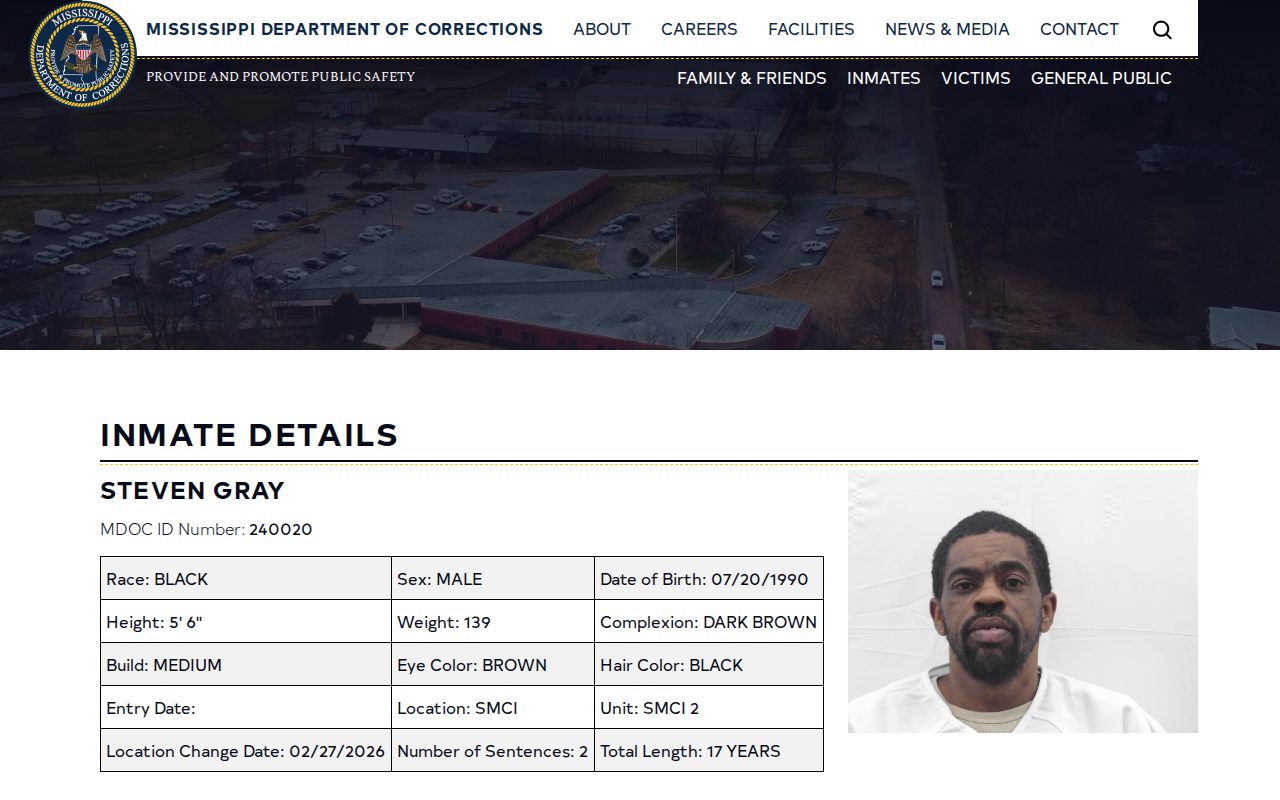
The screen helps distinguish similar names and identify the correct state sentence. Its tentative date still needs context from the location, supervision type, and later official record.
| Public field | How to use it | Limit |
|---|---|---|
| MDOC ID | Use as the main state-record identifier. | It does not identify a separate county booking number. |
| Photograph and date of birth | Reconcile identity with the named person. | A photo alone is not proof of identity or case outcome. |
| Location and unit | See the institution or supervision placement. | A location change may be a transfer. |
| County of conviction | Connect the sentence to Stone County when listed. | It does not prove the person is physically in Stone County. |
| Tentative Release Date | Read MDOC's current projected milestone. | It can change and is not an actual departure record. |
| Sentence and offense fields | Compare the controlling state commitment. | Later orders or credits may alter the calculation. |
Request MDOC Release Records
When the public result is unclear, direct a narrow written request to MDOC Records. Ask for the releasable custody-status history or time sheet, actual institutional release, ERS or parole placement, maximum or discharge date, and discharge certificate or inactive master-file status. Include the person's full name, MDOC number, date of birth if known, and Stone County conviction information. MDOC states that public-record requests must be in writing and does not accept telephone requests as the formal request itself.
Mississippi Department of Corrections Records
P.O. Box 24388
Jackson, MS 39225
Phone: 601-933-2889
Email: MDOCRecordsDepartment@mdoc.state.ms.us
Formal requests: written submission through the current MDOC public-records route. No public counter hours were documented in the reviewed source set.
The MDOC general-public page provides the current written request route.
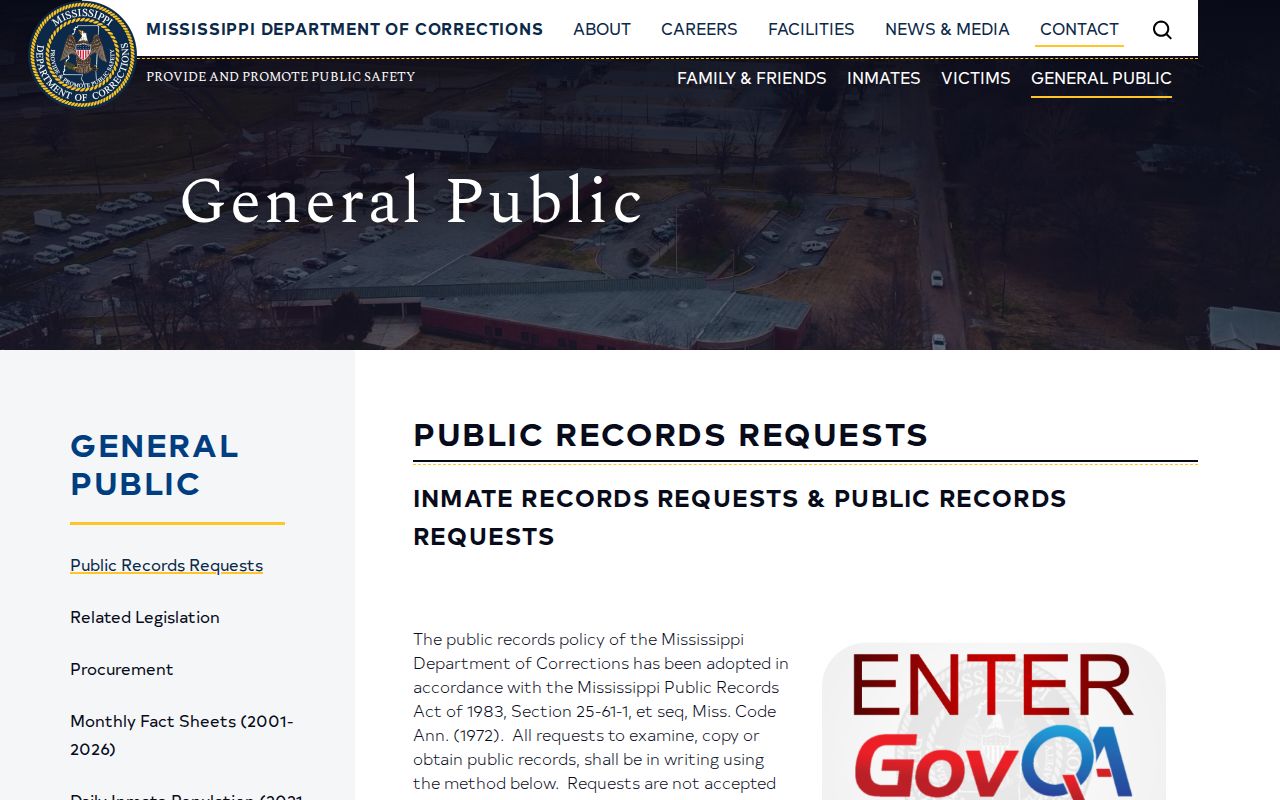
A written response can resolve whether the event was an institutional transfer, conditional community placement, or final discharge, which a single public search field may not establish.
MDOC Discharge Certificates Confirm Release
MDOC says release arrangements are reviewed and that processing can take time. The department also requires a discharge certificate before departure. That makes the certificate, a custody-history entry, or an inactive master-file record far stronger evidence of an old or disputed release than an attempt to reconstruct the event from a past tentative date.
The MDOC release-processing information explains that parole and ERS dates are not guarantees and that arrangements must be verified.
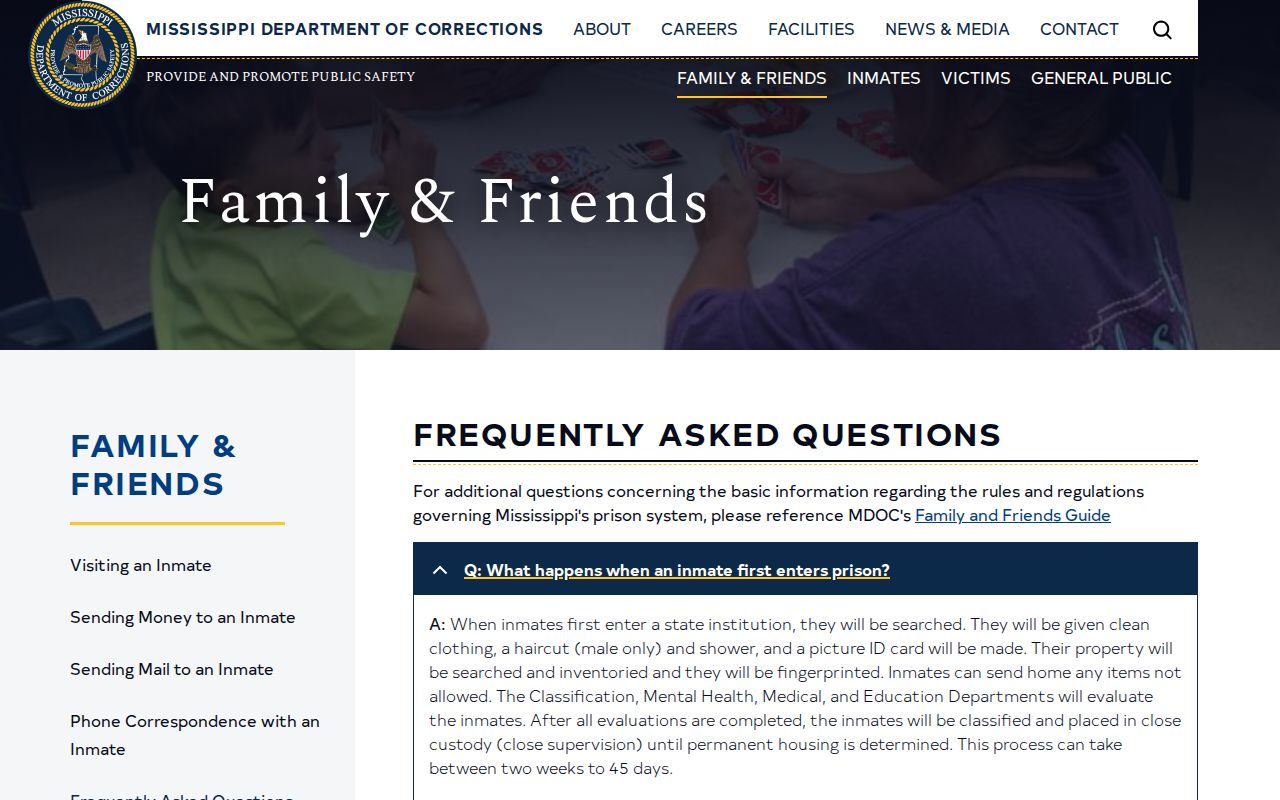
For a record that shows a date but still lists an institution, do not backdate a release. Ask MDOC for the current calculation and the record that reflects any change.
MDOC Supervision After Release
Community placement and full discharge are different. MDOC Community Corrections supervises parole, probation, ERS, and related statuses. The Mississippi State Parole Board decides parole, while MDOC field staff administer supervision. A Board grant may come before physical departure because release arrangements and any other holds still must be resolved.
The official parolee search accepts name, MDOC ID, city, and county, including Stone. A match supports public supervision status but does not supply the jail-door departure time. If that search is unclear, the Stone Probation & Parole Office can route a public status question. Detailed field notes are not public release records. The differences and verification route are covered on the Stone County Parole / Probation page.
| Status | Decision or control | Record to verify |
|---|---|---|
| Parole | Parole Board decision with MDOC supervision | Board action, parolee result, and MDOC location |
| Probation | Court order with MDOC supervision | Sentencing order and public supervision status |
| ERS | MDOC sentence calculation and eligibility | Time sheet and ERS supervision location |
| Discharge | Sentence completion | Discharge certificate or inactive record |
Stone Releases Need a Destination
In Stone County, the word release must be tied to a destination. The regional correctional facility can end a local booking through community release, transfer a state prisoner to another MDOC site, deliver a person to another county, or complete a handoff to a federal authority. The sending record should state the manner of release or transfer. The receiving system should then show intake when custody continues.
This two-record check resolves a common conflict. A person can disappear from Stone's vendor roster while the MDOC search lists a secure state location. That combination points toward a county-to-state handoff or separate booking, not proof that the person is free. Compare booking number, MDOC ID, dates, court information, and transfer paperwork before reaching a conclusion.
Federal Handoffs at Stone Regional
Stone County's regional facility has a federal detention agreement that permits certain U.S. Marshals Service, BOP, and ICE detainees to be held while they await trial, sentence, designation, transportation, an immigration hearing, or deportation. Those federal detainees leave through the authorized committing officer or process. A disappearance from the local roster can therefore mark delivery to federal custody instead of return to the community.
MDOC's state search is not the right final locator for that federal custody stream. Use the BOP locator for a sentenced federal prisoner, the ICE detainee locator for immigration custody, and the relevant federal court or U.S. Marshals route for pretrial or transport questions. Confirm both Stone's relinquishment record and the federal intake whenever a handoff appears.
Stone Regional Within MDOC
The Stone County Correctional Facility is a regional correctional site administered day to day by the Stone County Sheriff's Department with MDOC oversight for state inmates. It is not a state prison that represents the whole MDOC network, and it is not merely a municipal lockup. The official county roster calls the same Wiggins site the Stone County Detention Center, so the two labels should not be counted as separate facilities.
A local expansion added separate public and secure functions in 2010. That history belongs to the Stone site alone and does not describe MDOC facilities statewide. Later audits and population reports are dated snapshots, not current capacity or release statistics. Their value is in confirming the regional facility's place within a mixed local and state custody system, not in predicting releases.
Resolve Conflicting MDOC Release Records
Conflicts should be reconciled by record type and time. A court order authorizes an action, but the custody record shows whether staff executed it. A tentative date is a computation, while a discharge certificate documents the completed state-sentence event. A supervision result shows community control, not final sentence expiration. VINE provides an operational alert, not the underlying legal record.
When sources differ, preserve the exact field label and the date checked. Then ask the correct custodian for the record behind it. Use MDOC Records for state custody calculations and discharge, the Parole Board for board action, Community Corrections for public supervision routing, and the receiving authority for transfer intake. This keeps a Stone County commitment tied to the agency that had legal control at each step.
Note: A released person may remain searchable in MDOC records after leaving a secure institution.